




Amtrak’s Multi-Billion-Dollar Potentially Tragic Mistake
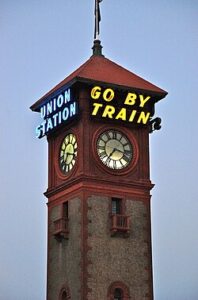
When Amtrak took over passenger rail in 1971 with the government’s intent on killing it all, nobody expected Amtrak to pick up any slack whatsoever. It did and it thrived, which it wasn’t supposed to do. Freight companies were all too quick to push off their passenger operations that hemorrhaged money left and right and the US government had no intention of supporting them either. The Nixon Administration, at the time, had one goal in mind: support the freight companies. Why? Because rail transportation of goods was America’s bread and butter, not the rail transportation of people. With highways still a relatively new thing and air travel becoming more affordable, even by 1970s standards, “Go(ing) By Train,” as Portland, Oregon Union Station’s clock tower proudly boasts, was just not viable.
The 1970s saw the nation-wide oil crisis, lines miles long at the local gas station resulted in nearly $5/gallon at the pump in 1973 ($0.60/gallon 1973, adjusted for inflation in 2025). Airlines were hit hard, too, with the average price bulging to around $700 during that time (in 2025 money) just to travel domestically in the United States! People realized there was an alternative right under their noses. All of this was an absolute perfect storm, giving Amtrak the push it needed to launch into the stratosphere.
Which is precisely what happened!
So, why wasn’t it a success?
The Outdated Equipment Conundrum
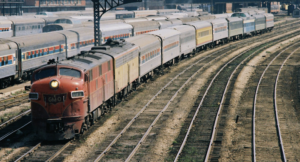
In the beginning, Amtrak-owned equipment was all inherited from the freight railroads that wanted to wash their hands of the whole operation. You wouldn’t be able to tell what an Amtrak train was unless someone slapped an “Amtrak” sign on the locomotive or the passenger cars in those first few years. Some Pullman Standard and Budd-built cars came out early, repainted in unmistakable Amtrak colors. But in essence, Amtrak didn’t have a single piece of its own equipment. Repainted E-series locomotives would become the poster child for the railroad until Electromotive Division’s F40 series motors would hit the scene. Yes, Amtrak had its own engines before the F40, but none were as successful. The company had continued on their contract with General Motor’s Electromotive Division even after the failure of their SDP40F locomotive – a 6-axle variant of their SD40 locomotives that were originally built for freight service. After numerous mechanical failures and derailments due to incompatibility issues with passenger equipment, Amtrak would soon realize that repurposed freight tech was simply not going to cut it. The F40s would revolutionize railroading in North America, forever!
With limited funding available, not being able to turn a profit certainly didn’t stop Amtrak from moving forward. Thankfully, the newborn railroad company didn’t have to look farther than failure. Believe it or not, a failure in the Northeast Corridor would paint the way for the next fifty years!
Going Back to the Past… Just a Little
With the explosion of high speed rail in Japan with the Shinkansen bullet trains in the 1960s, the US Government saw that as an opportunity to unleash a similar service in the Northeast. They contracted with the Pennsylvania Railroad, owners of the Northeast Corridor electrified rail line in the United States (at the time, Washington, DC to New York Pennsylvania Station) to build something remarkable. They did just that, with the Budd Company’s revolutionary Metroliner trainsets!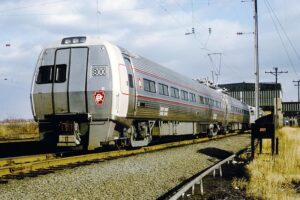
The original Metroliners were designed to outpace the Shinkansen and deliver passengers between Washington, DC’s Union Station and New York Pennsylvania Station in lower Manhattan in record time! However, Metroliner wouldn’t debut in time to save the Pennsylvania Railroad. After a merger with the New York Central Railroad to become Penn Central, the Metroliner would make its revenue debut under Penn Central pennants. The results were… mixed to say the least. Pantograph issues caused uneven power distribution. Also, the speed of the Metroliner was known to blow out windows on older Pullman carriages, causing massive damage and injury. As a result, the Metroliners would be pulled from revenue service and would not reenter service without seeing massive regulation. While that happened, they would never serve Penn Central again.
Amtrak would reinstate the service with the original trainsets after massive repairs and adhering to strict regulation and guidelines. To that end, Amtrak would look for alternative motive power and find it in Europe. However, Amtrak would not trust European manufacturers to bring the country into a newer, higher-speed age. Once again, Amtrak would go with General Motors’ Electromotive Division (EMD) and the AEM-7 “toaster” was born! This locomotive became the defacto poster child of the northeast corridor, something the company hoped the Metroliners would be. However, these locomotives would take passengers up and down the Northeast Corridor for the foreseeable future – before the next generation of electrics would be introduced.
Learning from Failure
This did not deter Amtrak from revolutionizing their onboard equipment. Learning the mistakes of the Metroliner, a design that was aerodynamic, fluid, not to mention stable, Amtrak would contract the Budd Company to produce a new series of passenger cars based off of the Metroliner design. The project, called Amfleet, would usher in one of the longest, most durable legacies Amtrak had ever produced. These cars (both Amfleets I and II, the long distance variant) would become so mechanically stable that they would not only prove their worth but offer a longevity no railroad had ever seen!
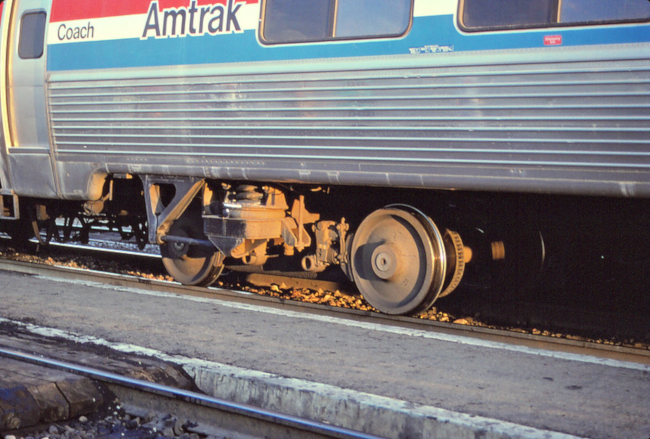
The engineering that went into the Amfleets was above and beyond what any railroad company could ever ask for! Pullman Standard didn’t have a fighting chance and Amtrak quickly phased out their, what they dubbed, “Heritage” fleet of coaches in favor of the Amfleets. Budd revolutionized the railroading industry with their Pioneer Trucks – those open wheels that had become synonymous with Amtrak’s single level fleets. These cars were and are durable, versatile, and more importantly, safe. When a car would go down for maintenance, downtime would be the shortest of any piece of equipment Amtrak had ever maintained with quick turnaround times. Teething problems were virtually non existent as Series One (Amfleet I) coaches and cafe cars rolled out onto the NEC with very few mechanical failures. Amfleet II, the long distance variant, would be basically the same, except with larger windows, two doors at one end of the car instead of four, and legroom for days! Just like their commuter counterparts, Amfleet IIs were just as reliable and easy to maintain.
Amfleets would prove their worth in the harsh winters after their debut. Equipped with head-end power (electricity compatible with that provided by the locomotive, which older cars were not and required to have either independent power per-car or a power car to provide electricity), Amfleets were able to keep their passengers comfortable in the worst weather conditions without breaking a sweat. The reliability of the Amfleets are so well known that Mexico purchased several decommissioned Amfleets directly from Amtrak, though those mechanics are currently having a rough time with maintenance since they were never trained on the equipment – a story for another article).
As the 1980s continued on, Amtrak would be looking for alternatives to the Amfleets. While the Amfleets were wildly successful, Amtrak decided to add another type of railcar to their mix.
Amtrak’s First European Mistake
Before Amtrak’s trouble with their Bombardier-built first generation Acelas, the company would first open a partnership with the French manufacturer to build the Amfleet III.
We know this better as the Horizon car.
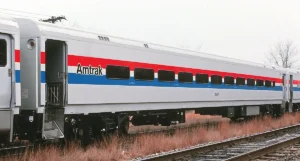
This railcar would be rated for slower speeds and come with traditional trucks to support the wheel assembly. These cars would serve shorter routes like the Wolverine, Missouri River Runner, among others. The Horizon design would be influenced by the Pullman Standard Comet I cars, which would, in turn, influence the Comet II cars built by Bombardier. The main customer for the Comet II cars being New Jersey Transit also had many issues with their equipment, just as Amtrak did with the Horizon.
The Horizon’s unreliability would become well known, and would come to a head in 2025.
Back to Basics
With the Bipartisan Infrastructure funding that awarded Amtrak $16 billion in Federal funds, the railroad went to work thinking of dream scenarios – additional routes that they would like to take on, equipment upgrades, infrastructure improvements, and so-on. Recovery from the COVID pandemic was slow and painful, and many services suffered. However, the company’s executive board would make sure the use of that money would go towards anything other-than. Amtrak would roll out plans to release the next generation of Acela trains, dubbed the “Avalia Liberty,” based on Alstom’s high speed trains in Italy and Spain, right down to the elimination of comfortable seating Amtrak was world famous for. These trains would be delivered to Amtrak, ready to go, except… they weren’t.
Almost immediately during testing, Amtrak would discover a plethora of mechanical issues that would sideline the trains for almost a half decade. These were similar to the problems that plagued Bombardier’s original Acela sets. Amtrak, deciding that learning from experience was paramount, unlike those original trains, delayed the Liberties for as long as they could.
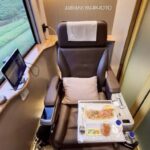
Venture cars would slowly trickle into Amtrak service at the same time. These new style of coaches, built by Siemens, would increase passenger capacity and amenities while decreasing passenger comfort down to the atrocious European levels. Hard seats that barely breathe, shoddy recline, and thin padding brought the comfort level to almost a grinding halt! Yes, Brightline deployed the Ventures on their trains. However, the same complaints and issues as Amtrak’s variants (spoiler alert: just a difference in upholstery and paint schemes) arose with Brightline as well. In-production mechanical issues would delay the debut of the cafe car variants for Amtrak. However, their debut was also mired in criticism rather than praise. The rollout of only a few cafes were carried out in 2025 for Amtrak Midwest. However, those cars were often replaced with the tried and true Amfleet I cafe cars when Venture cafes failed (and they failed quite often).
In 2025, the Trump Administration cut critical funding to Amtrak, which was met with mixed reactions from across the board. President Trump has had experience in dealing with Amtrak during his first administration, when Amtrak was forced to do what they do best: innovate! What seemed like a Mortal Kombat fatality to the railroad was actually seen as a kick in the rear. Amtrak got into high gear and started to take actions that led to the production and delivery of the Avalia Liberty trains. Once the $16 billion grant was issued by the Biden Administration, Amtrak simply sat on those trains, slowly working out the kinks with no real sense of urgency. It was when Trump cut Amtrak funding, again that Amtrak did what they did best: innovate!
With limited funding, Amtrak deployed the new trains, rebranding them as the “Next Gen Acela” trainsets.
This was after a major crisis with their Bombardier Horizon Cars which couldn’t take the punishment the Amfleets faced on a daily basis. The entire fleet of Horizons were pulled from service, to the panic of every railfan and critic alike. Cries of, “Hurry up, Amtrak and bring on the Airos! NOW!” echoed throughout the railroading community. However, instead of waiting for Siemens to produce and release the first Airo trainset (set to replace the Amfleet Is, for some reason), Amtrak decided to replace the Horizons with Amfleets… Yes, the very same Amfleets that are being replaced by Ventures and Airos! This very act ended just a couple of days of service disruptions in the Northwest and Midwest Corridors where Horizons were primarily used.
Once again, Amfleets would save the day!
Age Doesn’t Mean Obsolescence
The primary problem with Siemens-built equipment is that the construction is shoddy. All of the creature comforts aside, engineering problems with both the Charger locomotives and the Venture cars are killing service left and right across Amtrak’s network. Even the Northeast Corridor which runs Amtrak City Sprinter locomotives (Siemens ACS-64 locomotives that replaced the AEM-7s) is not exempt from mechanical issues. Service delays across all levels of Amtrak service, primarily with services pulled by the ACS-64s, encounter frequent head-end mechanical failures that bring trains to a screeching halt in the middle of a busy run. ALC-42 (Amtrak Long-Distance Charger) locomotives have both intake and computer issues which cause frequent breakdowns. The frequency of these service disruptions, through observation, is significantly greater than those of the first-run EMD’s F40PH and Genesis series P-32 and 42 locomotives when they were first deployed. Most services continue to be pulled by the P-42s while Chargers continue to be pulled from service for maintenance. While the F40s are not compatible with modern infrastructure, the P-42s are also phasing out of compatibility, leaving the Chargers to pick up the slack.
Unfortunately for Amtrak, this is leading to a huge revenue loss due to breakdowns and frequent delays/cancellations.
The Future Isn’t So Bright
In light of all of these issues, Amtrak’s future isn’t looking too good. If the company continues down this path, the majority of routes that are undergoing equipment replacement will suffer loss at the hands of inferior foreign tech. Amtrak complies with the “build in America” requirement imposed during the Biden Administration. However, that just means shoddy European construction, which has been known to fail harder than trying to make 2 + 2 to equal 5, is done in America. Desperation is certainly a factor as a prototype Airo in Cascades livery is now, at the time of this writing, going through testing on the Northeast Corridor. While the Airos look great on the outside, the inside still suffers from bad European design that replaces comfort with more passenger space. Amtrak is heading down the wrong right of way and is on a collision course with extreme failure. The train needs to hit the switch now before it’s too late.
The Path Forward
If Amtrak is recover from the string of failures it’s been suffering recently, they need look no further than the Amfleets. They need to have a study panel to figure out why a 50+ year-old car design (from the top-down) continues to be the superior model. They need to examine their relationship with Siemens and Alstom and wonder why they are being allowed to receive inferior products like the Ventures and Next Gen Acelas. Brightline and VIA Rail Canada are both in possession of Ventures, with the latter currently running trainsets that are actually what Amtrak ordered for Airo. They need to sue to figure out why Brightline and VIA got good quality sets while Amtrak continues to get the shaft from these foreign-run companies.
One company that showed promise was the Nagoya-based Nippon Sharyo. However, according to Trains Magazine, in 2015 the company failed a crash worthiness test under proctoring by the Federal Railroad Administration. Their key production facility was closed in 2018, forcing Amtrak to go with Siemens, a proven failure in the industry. Alternatives to the shoddy workmanship of one of the worst manufacturers of railroading equipment today would include Hitachi and Kawasaki. Both of these entities currently produce railcars in the United States and Japan and could easily deliver Budd-level durability, safety, and technology compatible with today’s infrastructure. Having Hitachi or Kawasaki deliver equipment for Amtrak may set the company back another five maybe ten years. However, Amfleets continue to pull their weight and prove themselves still without the service-breaking mechanical issues that Siemens equipment currently suffers from. So long as they don’t take shortcuts like Nippon Sharyo, Hitachi and Kawasaki could stand to make outstanding equipment for Amtrak.
Amtrak desperately needs a way out! They need a plan that honors the legacy of the railroad. They need a roadmap drawn out by someone who actually loves and supports Amtrak in every way. They understand how vital Amtrak is to American railroading and want to see it succeed. What would a plan that could potentially save the railroad look like? How would it take shape? What are the risks, and if Amtrak were to go this route, could it be done quick enough to offset the impending doom that it currently faces with substandard equipment roll-outs?


Recent Comments