




HEAR IT!
Play this story on the go!
Not That Amtrak Needs to be Great “Again”
Because it already is.
The story of Amtrak is one of perseverance and survival, innovation and revolution. When Nixon introduced RAILPAX in 1971, it was pitched to the public as a way to save America’s failing passenger rail networks. In reality, it was a way to allow railroads to pivot away from passenger rail altogether and focus mainly on freight. As part of the deal, the government would buy these passenger services from the railroads and put them under the RAILPAX umbrella. The idea was to quietly phase out these trains so that freight can run freely. Thus, when Amtrak was born, she was only supposed to die a quick and painless death within two years.
Too bad the Nixon regime didn’t count on hiring people to run Amtrak that actually loved the industry and worked tirelessly to make Amtrak work. When the oil crisis of the 1970s hit, Amtrak rose to the occasion and set back dissolution of long distance intercity passenger rail for, so far, over a half-century!
Today, after so many struggles with political opposition, shoddy equipment, severely fluctuating ridership, and so much more, Amtrak is absolutely thriving! One of the main reasons for this is through popular YouTube channels highlighting Amtrak travel especially during the COVID pandemic. Channels like Jeb Brooks, Miles in Transit (my personal favorite), Lone Star Trip Reports, Distant Signal, Simply Railway (among others) have amassed huge followings, not just among rail enthusiasts but among regular folks as well. No doubt this contributes to the steadily increasing ridership numbers the likes of which Amtrak had never seen.
Even in Japan, Kuga’s Travels and Solo Travel Japan have both featured Amtrak trips, exposing the magic of train travel to America’s closest ally. Oddly enough, Japan was the rival the 1960s US government targeted to compete in the world of high speed rail…
And lost. Miserably. (Search for “Metroliner history” for more info. AmtrakGuy365 on YouTube has an awesome documentary on the project).
So the idea that Amtrak was never “great” stems from its current arrangements that haven’t changed since its inception. Freight railroads couldn’t completely wash their hands of their money losing passenger routes. As Amtrak evolved, railroads would be forced to accommodate Amtrak trains on their own rails. The cost of operation would be squarely on Amtrak, though. Amtrak would also have to pay for right of way on freight lines. However, freight companies were ordered to do the following:
- Give Amtrak trains right of way priority
- May not deny Amtrak right of way access
Freight railroads would be able to call it a wash. Amtrak paid their right of way fees which would in turn compensate railroads for any operating costs incurred with Amtrak traffic.
Sounds like Amtrak was set up to never fail and succeed beyond anyone’s wildest expectations.
Right?
The Resistance Rises (or, Freight Rail’s Revenge)
Each year beyond 2005’s Hurricane Katrina, Amtrak continued to incur delay after delay. Post hurricane service disruptions were expected. What wasn’t was the continual resistance the freight railroads would put up. Granted, from day one these companies wanted nothing to do with any kind of passenger rail. Now, lawmakers are trying to hold guns to rail executives’ heads saying, “obey or else.”
The guns were either not loaded, filled with blanks, or jammed with the safety on, depending on the situation. With each government threat to enforce Amtrak’s right of way priority law (it’s not a suggestion) the freight companies simply shrug and say, “Hold my beer.”
The first and most grievous in post Katrina America is the increase in train lengths. The freight railroads’ excuse: the longer the train the more supply we can move. The actual reason: keep train lengths long and suddenly they can’t fit in sidings.
What can?
A 7 to 10 car Amtrak train. A two mile-long freight train can’t fit in a siding less than a mile long. So, who gets to sit and wait?
When rail advocates called out railroads on this practice, the companies said “FAFO.”
Find out they did.
Distant Signal on YouTube explains the steps freight companies took in order to “improve their schedules,” as well as quadrupling the length of their trains using something called distributive power. This is simply one or two engines in the middle of a train to increase motive power. Now, potentially, trains up to five miles long can run with enough fuel efficiency to make it cross country without having to stop for fuel (figuratively of course). With freight traffic reduced to 35mph or less on swaths of track, a 79mph Amtrak train is stuck at zero while a five mile-long train passes them for about 30 minutes. This is on top of the receiving of the red stop signal 30 minutes before the passing train arrives.
The “hidden in plain view” level of hostility towards Amtrak has never been higher. Some companies like Union Pacific often increase their carrier charges to force Amtrak to pay more in operating costs while still refusing to yield right of way to passenger trains.
As federal law keeps being trampled on by companies that once ruled the nation, Amtrak continues to suffer. This all contributes to the image that Amtrak currently has, somehow garnering a “better than Greyhound” label in spite of being leagues beyond the fledgling Flixbus owned bus service.
Why Amtrak is in Danger
If relations with freight companies weren’t enough, Amtrak is inundated with a litany of issues that keep her stagnant. The carrier has often suffered through safety and mechanical issues with aging equipment.
From the very beginning, Amtrak has had numerous mechanical setbacks with inherited gear. AmtrakGuy365’s documentary on the Metroliners tells the story of how this was the first real setback based solely on older equipment. Though no more than 5 years old the Metroliners were sidelined by Penn Central due to a variety of issues, setting Amtrak’s potentially high revenue earnings untold amounts. Once the trains returned to service, regulation both legal and mechanical neutered the service and Amtrak could not deliver on the Metroliner promise.
While Amtrak continued to draw up dream scenarios with top of the line equipment, they kept coming up short on the delivery side. The SDP40F locomotive, a derivative of the SD40 freight variety, replaced the 1940s E series locomotives as Amtrak’s first original motive hardware. Frequent breakdowns and delays plagued the motor as well as numerous derailments. The fact that these motors lacked what’s called “head end power” meant that when the engine broke down, so did the rest of the train.
Amtrak’s problems with revolutionary rail tech would continue with the Turboliner trains. These sleek diesel turbine turbos would become Amtrak icons throughout the 1980s. These, too, would end up being sidelined until kinks could be ironed out. Like the Metroliners, limitations placed upon them for safety would eliminate their appeal. Another great documentary by AmtrakGuy365 covers their story as well.
Ironically, in 2000 and 2001, brake problems would bring the Bombardier Acela trainsets to a screeching halt. Bombardier’s predatory practices towards Amtrak put lives at risk and they decided to sell the substandard sets. So Amtrak did what any good red blooded American would do.
They sued.
The lawsuit was reactionary. Amtrak, once the mechanical issues were discovered, stopped payment and demanded Bombardier fix them before paying another dime or accepting another train. Bombardier sued Amtrak for breach, citing the mechanical issues were due to Amtrak providing inadequate specifications, rather than their own shoddy craftsmanship. Amtrak’s suit was indeed for that said horrible work and that was the reason for the breach.
The suits cancelled one another out and Amtrak would end up taking delivery of the remaining sets from Bombardier/Alstom. Amtrak would be put on the hook for maintenance and pre-deployment troubleshooting. However, it would be to Amtrak’s credit, not Bombardier/Alstom’s, that made these trains the end over end success that they were. Again, Amtrak could only rely on itself to get things right. The payoff was huge, make no mistake. Amtrak created its most popular train service since they discontinued the Metroliner service (its modern variation, not the equipment).
Today’s State of Amtrak
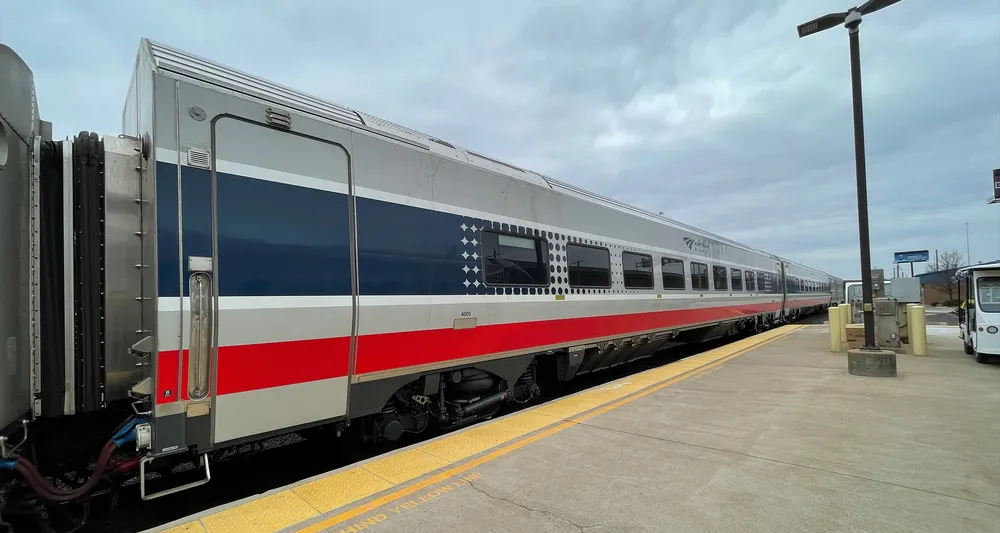
Today, Amtrak finds itself yet again in the same muddy waters with these European makers. Siemens Venture cars have already seen a handful of mechanical issues that delayed their mass deployment. Cafe cars that were to supplant the Amfleet I and Horizon cafes were delayed. Once they did enter revenue service, the cars themselves were panned by critics, and even mechanical failures after deployment contributed to onboard service disruption.
The Venture cars weren’t the only Siemens failures. The Charger locomotives are proving to be rife with sensitivity issues. A cold winter chill has been known to grind trains to a halt and delay service. A rare site became more familiar as host railroads would bail out trains by lending out motive power to stranded Amtrak services. A UP, CSX or NS engine hauling an Amtrak consist with a broken down Charger became a common occurrence. Amtrak would be forced to continue to use the more reliable GE P42 locomotives for a little while longer while the carrier started to clean up Siemens’ mess.
In 2025, Bombardier/Alstom-built Horizon cars began to corrode, not simply break down. These cars were to be the commuter alternative to the Amfleets, but couldn’t take half of the punishment inflicted on Amfleets on a daily basis. After just thirty years of over the road service, Amtrak was forced to ground its entire Horizon fleet. While railfans panicked online about Ventures not being around in time, pointing the finger at Amtrak, the carrier fell back on the Amfleets and quickly recovered service in the Northwest.
If you ask passengers who have taken routes like the Missouri River Runner that rolls with Venture cars, you’ll hear something similar from everyone: the older seats were much more comfortable. What’s missing from the Ventures, beyond them actually working, is everything Amtrak had been known for.
The European Curse
The prestige of having European class modernity on American rails is quite appealing. Trains are state of the art, reliable, and cheap. Ventures are two of those things. Reliable it is not.
What else aren’t the Ventures?
Comfortable.
These cars are designed with “move as many as possible and maintain economics” philosophy, typical for European marketing. The interior just looks budget. Rock hard seats. Hardly any recline. It’s a complete mismatch for Amtrak.
In a country where one station is separated by hours of travel time, Venture seating is not for an Amtrak passenger. Reduced legroom and hardly any recline (Miles in Transit often comments that he can’t tell if a Venture seat is in recline or not), these are clearly not cars you’d want to ride in for anything longer than a hour.
Amtrak is famous for comfort on a budget. Even in the smaller Amfleet I cars, you can always count on your seat being comfortable. Amfleet II and Superliner coach class offers legroom for days (the same you’d have to pay up to 15 times more to get on an airplane; also standard on Japanese trains), comfortable seats you can easily sleep in, and while they have basic amenities and are technologically stuck in the 1990s, there isn’t anything else you need. They have it all.
Many rail fans pit Amtrak up against the likes of Europe’s networks and try to compare. “Oh, Europe is better because of ABC!” Meanwhile, they’ll dunk on Amtrak until it’s time to ride it. Then suddenly, it’s that “Famous Amtrak flatiron steak” that gets all the raves. The dunking mysteriously stops. This is because rail fans know there really is no comparison. Amtrak is in a league all of its own. It cannot go toe-to-toe with Europe or Japan because Amtrak, and America, aren’t designed that way.
Amtrak would be better suited to stop listening to the “European trains are prestige” crowd.
Where Amtrak Should Look
Even though Amtrak is politically primed and locked in with European manufacturers Alstom and Siemens, these two companies have consistently delivered nothing but hot steaming piles of junk. Defects in the Avelia Liberty trainsets forced Amtrak to sit on millions in potential revenue for almost a half-decade after delivery; delays interrupting the full roll-out of the Siemens Venture cars; critical failures in the Siemens Charger locomotives having devastating effects on schedules all add up to the cold hard truth: Amtrak is locked in a death roll. It would be best for Amtrak to ditch Europe altogether and go with a proven, modern, safe, reliable and comfortable alternative.
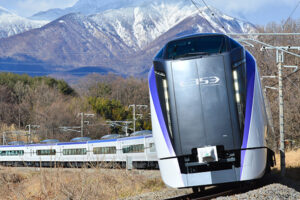
Since the Budd Company is no longer a thing and the Amfleets are in for a long overdue retirement, American companies simply don’t exist to create motive power nor rolling stock anymore, that leaves only one country to research. This country is known for having the most efficient rail network in the world. They pioneered high speed rail before there was ever high speed rail. Safety standards that rival Amtrak’s, and then some.
Yes, I’m talking about one of America’s best allies in the world: JAPAN!
In the next installment of this series, I will explore how Japan can help bring Amtrak out of the mechanical and logistical rut that it’s in. I’ll even lay out a plan that, if I had any power or influence whatsoever, Amtrak could follow to achieve deliverables before 2030. Make no mistake – this was, in fact, a hit piece. Not against Amtrak – they’ve been dealt dirty at the poker table since 1993. I’m talking directly towards Amtrak’s forced partnership with two of the leading European rail manufacturers who have turned out dumpster fire after dumpster fire and cost Amtrak a couple of billion since Acela in 2000!
Until next week!


Recent Comments